

High-risk businesses often face account rejections and limited banking options, making financial management challenging. Specialized banking solutions in Europe now offer 85% approval rates through fintech platforms designed for industries traditional banks avoid. This guide examines key criteria, payment methods, pricing structures, and provider comparisons to help you select the best banking solution for your cross-border operations in 2026.
Table of Contents
- Key Selection Criteria For Banking Solutions In High-Risk Industries
- Digital Business Accounts With Multi-Currency And Multiple IBANs
- Cross-Border Transaction Solutions: SWIFT, SEPA, And Local GBP Payments
- High-Risk Account Approval Challenges And Fintech Solutions
- Pricing And Fee Transparency For High-Risk Banking Services
- Summary Comparison Of Leading Banking Solutions For High-Risk Industries In Europe
- Situational Recommendations: Choosing The Best Banking Solution For Your High-Risk Business
- Explore Bankz For Tailored High-Risk Business Banking Solutions
- Frequently Asked Questions
Key takeaways
| Point | Details |
|---|---|
| Approval rates | Fintech platforms achieve 85% approval rates for high-risk businesses compared to 40% at traditional banks. |
| Multi-currency accounts | Reduce operational costs by up to 30% while simplifying reconciliation across European markets. |
| Payment coverage | SEPA, SWIFT, and local GBP options handle 90% of European cross-border business transactions. |
| Fee transparency | Digital banking platforms charge 0.1-0.5% on cross-border transactions versus 1%+ at traditional banks. |
| Onboarding speed | Automated compliance processes enable account approval in 48 hours through leading fintech providers. |
Key selection criteria for banking solutions in high-risk industries
Choosing the right banking partner determines whether your business can operate smoothly or faces constant payment disruptions. High-risk industries need providers that understand regulatory complexities and offer reliable access to financial infrastructure.
Approval rates stand as the most critical factor. Traditional banks reject applications based on industry classifications alone, creating operational bottlenecks before you even launch. Fintech platforms specializing in online business banking for high risk industries evaluate applications individually, considering your actual business model rather than blanket policies.
Multi-currency functionality eliminates the need for multiple bank relationships across Europe. Look for platforms offering multiple IBANs within a single account, allowing you to receive payments in euros, pounds, and other currencies without constant exchanges. This capability reduces conversion fees while simplifying bookkeeping and tax reporting.
Cross-border payment options determine your ability to pay suppliers and receive customer payments efficiently. SEPA covers euro transactions within Europe, SWIFT handles global transfers, and local GBP payments serve UK trade relationships. Your provider should support all three methods with transparent processing times.
Compliance support makes onboarding faster and reduces ongoing administrative burden. The best platforms handle Know Your Customer (KYC) verification, anti-money laundering (AML) checks, and regulatory reporting, freeing you to focus on business growth rather than paperwork.
Fee structures must be transparent and predictable. Hidden charges for currency conversion, international transfers, or account maintenance erode profitability. Request detailed fee schedules covering all transaction types your business uses regularly.
Customer support quality matters when problems arise. Dedicated account managers who understand high-risk industries can resolve issues quickly, whereas generic support teams may freeze accounts first and ask questions later.
Pro Tip: Prioritize fintech platforms with proven track records serving your specific industry to improve approval odds and access tailored compliance guidance.
Digital business accounts with multi-currency and multiple IBANs
Managing separate accounts for each currency creates unnecessary complexity and expense. Modern digital banking consolidates all currencies into unified platforms that reduce overhead while improving financial visibility.
Multi-currency digital business accounts reduce operational costs by eliminating the need to convert funds constantly. When you receive euros from German clients and pounds from UK customers, both deposits sit in their native currencies until you actually need to exchange them. This flexibility lets you time conversions to capture favorable rates.

Multiple IBANs within one account solve reconciliation headaches. Assign different IBANs to distinct business lines, geographic markets, or customer segments. Your accounting team can instantly identify payment sources without cross-referencing external records. This separation also simplifies tax reporting when operations span multiple jurisdictions.
Integrated currency exchange tools deliver better rates than traditional wire transfers. Platform algorithms monitor real-time markets and execute conversions at interbank rates plus minimal markup, typically 0.3 to 0.5%. Compare this to bank spreads exceeding 2% and the savings compound quickly across hundreds of transactions.
Unified dashboards provide comprehensive financial overviews impossible with scattered accounts. View balances across all currencies simultaneously, track pending transactions, and generate reports covering entire operations. Real-time visibility supports faster decision-making and tighter cash flow management.
Businesses transacting in both Eurozone and UK markets benefit enormously from this structure. You can invoice British clients in pounds, pay Polish contractors in euros, and maintain dollar reserves for international expansion without juggling three separate banking relationships. The operational efficiency gains translate directly to competitive advantages.
Pro Tip: Use separate IBANs for different business divisions to automate reconciliation and create cleaner audit trails that satisfy tax authorities across multiple countries.
Platforms offering these capabilities also provide resources to help you cut multi-currency banking costs through strategic currency management and optimized transaction timing.
Cross-border transaction solutions: SWIFT, SEPA, and local GBP payments
European businesses need reliable payment channels that balance speed, cost, and geographic coverage. Three systems dominate cross-border transactions, each serving specific use cases.
SEPA (Single Euro Payments Area) enables euro transactions within 36 European countries with settlement typically completing in under 24 hours. Banks process SEPA transfers at minimal cost, often free for domestic transactions and under €1 for cross-border payments within the zone. This system handles payroll, supplier payments, and customer refunds efficiently when all parties operate in euros.
SWIFT connects over 11,000 financial institutions across 200+ countries, making it essential for global operations beyond Europe. While slower than SEPA (2 to 5 business days) and more expensive (fees ranging from €15 to €50 per transfer), SWIFT remains the only option for payments to Asia, Americas, or other non-European markets. Use SWIFT strategically for significant international transactions where speed matters less than global reach.
Local GBP payment systems facilitate UK transactions with settlement speeds matching domestic transfers. These channels became increasingly important post-Brexit as UK businesses maintain strong trade relationships throughout Europe. Direct GBP payment capabilities eliminate unnecessary currency conversions when dealing with British suppliers or customers.
International payment options including SWIFT, SEPA, and local GBP cover the vast majority of European business payment scenarios. Combining all three methods provides complete flexibility to optimize each transaction for speed, cost, or geographic requirements.
| Payment Method | Geographic Coverage | Typical Speed | Standard Fees | Best Use Cases |
|---|---|---|---|---|
| SEPA | 36 European countries | Under 24 hours | €0 to €1 | Euro zone supplier payments and customer invoicing |
| SWIFT | 200+ countries globally | 2 to 5 business days | €15 to €50 | International payments outside Europe |
| Local GBP | United Kingdom | Same or next day | €0.50 to €2 | UK trade relationships and British suppliers |
Businesses should maintain access to all three channels through their banking provider. This flexibility allows you to route each payment through the most efficient system, minimizing costs while maintaining reliable settlement times. Platforms like international business bank account solutions integrate these payment options into single dashboards that automatically recommend optimal routing.
High-risk account approval challenges and fintech solutions
Traditional banks maintain rigid risk policies that automatically exclude entire industries from banking services. This approach creates significant barriers for legitimate businesses in sectors like cryptocurrency, adult entertainment, gaming, CBD products, and payment processing.
Bank rejection rates for high-risk applications range from 40% to 60%, forcing businesses through exhausting application cycles. Many traditional institutions won't even review applications from blacklisted industries, regardless of business quality or compliance history. This blanket discrimination pushes viable companies toward expensive alternative financing or informal payment arrangements.
Fintech platforms transform this landscape by evaluating businesses individually rather than applying industry-wide bans. These providers achieve approval rates around 85% by examining actual business models, compliance frameworks, and transaction patterns. They recognize that risk varies significantly within industries and proper due diligence identifies trustworthy operators.
Automated KYC and compliance systems accelerate onboarding dramatically. Digital identity verification, document scanning with optical character recognition, and automated background checks compress processes that took weeks into 48-hour turnarounds. This speed matters enormously when you're racing to launch products or need immediate payment processing capabilities.
Some traditional banks exclude industries entirely through internal policies disconnected from actual regulatory requirements. They fear reputational damage or regulatory scrutiny more than they value potential customers. Fintech providers built specifically for underserved markets embrace these businesses, developing specialized compliance expertise that actually reduces risk through proper oversight.
Tailored customer support teams understand industry-specific challenges and provide proactive guidance. Rather than generic call centers, you get account managers familiar with your regulatory environment who can anticipate problems before they trigger account freezes.
"Fintech platforms have fundamentally changed access to banking for high-risk industries by replacing blanket rejections with nuanced underwriting that evaluates actual business practices rather than industry stereotypes." — Financial Services Innovation Report 2026
Pro Tip: Prepare comprehensive documentation including business plans, compliance procedures, and transaction forecasts before applying to maximize approval odds and accelerate the onboarding process through fintech platforms.
Businesses struggling with traditional bank rejections should explore banking setup for high risk industries to understand specific requirements and improve application success rates.
Pricing and fee transparency for high-risk banking services
Fee structures vary enormously across banking providers, making cost comparison essential before committing to any platform. Understanding total cost of ownership prevents budget surprises and enables accurate financial forecasting.
Cross-border transaction fees represent the largest ongoing expense for internationally active businesses. Fintech platforms typically charge 0.1% to 0.5% on international transfers, while traditional banks often exceed 1% plus fixed fees ranging from €20 to €50 per transaction. These differences compound rapidly as transaction volumes grow.
Card issuing fees apply when obtaining physical or virtual debit cards for business expenses. Expect one-time issuance charges between €5 and €15 per card, with some platforms offering free virtual cards. Monthly maintenance fees for cards range from €0 to €3, depending on card type and usage patterns.
Currency exchange markups hide significant costs within seemingly simple conversions. Banks advertise "no fee" exchanges while embedding 2% to 3% spreads between buy and sell rates. Transparent platforms disclose exact markups, typically 0.3% to 0.5% above interbank rates, saving thousands annually on substantial conversion volumes.
Transaction processing fees vary by payment method. SEPA transfers often cost under €0.50, while SWIFT payments command €15 to €50 depending on destination and intermediary banks. Local payment methods usually carry minimal fees comparable to domestic transactions.
Hidden fees create budget overruns that erode profitability silently. Watch for charges on incoming transfers, minimum balance requirements, account inactivity fees, statement generation, and customer support access. Request complete fee schedules covering every service you'll use regularly.
| Provider Type | Cross-Border Fees | Currency Exchange | Monthly Account Fee | Card Issuance | Payment Processing |
|---|---|---|---|---|---|
| Bankz.eu | 0.1% to 0.3% | 0.3% to 0.5% markup | €0 to €15 | €5 physical, €0 virtual | SEPA €0.50, SWIFT €20 |
| Traditional Banks | 1% to 2% | 2% to 3% markup | €20 to €50 | €15 to €25 | SEPA €5, SWIFT €40 to €50 |
| Other Fintechs | 0.3% to 0.7% | 0.5% to 1% markup | €5 to €25 | €10 to €15 | SEPA €1, SWIFT €25 to €35 |
Cost-saving examples illustrate real-world impact. A business processing €100,000 monthly in cross-border transactions saves €700 to €1,700 monthly by switching from traditional banks (1.5% average) to fintech platforms (0.3% average). Annually, this represents €8,400 to €20,400 in reduced fees that flow directly to profit margins.
Pro Tip: Select providers offering flat or tiered fee models aligned with your transaction profile rather than percentage-based fees that scale costs indefinitely as your business grows.
Businesses seeking cost optimization should examine business debit visa cards fees structures to understand total expenses across card usage and account maintenance.
Summary comparison of leading banking solutions for high-risk industries in Europe
Comparing providers side by side reveals significant differences in approval likelihood, feature sets, and total costs that impact daily operations and long-term viability.
Bankz.eu leads with 85% approval rates specifically for high-risk businesses, providing comprehensive multi-currency accounts with multiple IBANs, full SWIFT/SEPA/GBP payment support, and transparent fee structures starting at 0.1% for cross-border transactions. The platform emphasizes rapid onboarding (48 hours typical) with dedicated support teams familiar with high-risk industry challenges.
Traditional banks maintain approval rates below 45% for high-risk applications, often rejecting entire industries without individual evaluation. While they offer established reputations and broad branch networks, their higher fees (1%+ on international transactions), slower onboarding (2 to 4 weeks), and limited multi-currency capabilities make them less competitive for cross-border operations.
Leading fintech competitors achieve approval rates around 75%, offering modern digital interfaces and moderate fees (0.3% to 0.7% on cross-border transactions). These platforms balance innovation with growing track records but may lack the specialized high-risk industry expertise that ensures smooth ongoing account management.
| Provider | Approval Rate | Multi-Currency | Payment Options | Cross-Border Fees | Onboarding Speed | Best For |
|---|---|---|---|---|---|---|
| Bankz.eu | 85% | Yes, multiple IBANs | SWIFT, SEPA, GBP | 0.1% to 0.3% | 48 hours | High-volume cross-border businesses in high-risk industries |
| Traditional Banks | 40% to 45% | Limited | SWIFT, SEPA | 1% to 2% | 2 to 4 weeks | Established businesses in conventional industries |
| Leading Fintechs | 70% to 75% | Yes | SWIFT, SEPA | 0.3% to 0.7% | 3 to 5 days | Startups and SMEs needing fast digital banking |
The comparison highlights that businesses in high-risk industries benefit most from specialized fintech platforms rather than attempting to fit into traditional banking models designed for conventional sectors. Providers like Bankz high-risk banking solution deliver purpose-built services that anticipate industry-specific needs and regulatory requirements.
Account features beyond basic payments also matter. Look for integrated expense management, virtual card generation for online purchases, and automated accounting software connections that reduce manual bookkeeping. These capabilities compound efficiency gains across your entire financial operation.
Situational recommendations: choosing the best banking solution for your high-risk business
Matching your specific business profile with the right banking provider maximizes approval likelihood while optimizing costs and operational efficiency.
-
High-volume cross-border traders: Businesses processing significant international transactions benefit most from Bankz.eu's low transaction fees (0.1% to 0.3%) and multiple IBAN structure that separates customer payments by market. The cost savings on thousands of monthly transactions justify any learning curve in platform adoption.
-
Startups and early-stage SMEs: Companies needing immediate banking access should prioritize fintech platforms offering 48-hour onboarding. Rapid account approval lets you launch operations without extended delays, capturing market opportunities that disappear during lengthy traditional bank application processes.
-
Industries facing traditional bank exclusion: Businesses in cryptocurrency, gaming, adult entertainment, or CBD sectors should focus exclusively on specialized fintech providers with proven high-risk industry track records. Attempting traditional bank applications wastes time and creates rejection records that complicate future applications.
-
Cost-sensitive businesses with thin margins: Companies where banking fees significantly impact profitability need platforms with transparent, competitive pricing. Bankz.eu and similar fintechs charging 0.1% to 0.5% on transactions preserve margins better than traditional banks at 1%+ plus fixed fees.
-
UK-EU trade-focused operations: Businesses with substantial British supplier relationships or customer bases require robust local GBP payment capabilities alongside SEPA euro transfers. Platforms offering both without forced currency conversions reduce costs and settlement times.
-
Rapidly scaling businesses: Companies experiencing fast growth need banking partners that scale seamlessly without triggering account reviews or limitations. International business bank accounts designed for high-risk industries accommodate volume increases through tiered pricing rather than percentage-based fees that scale costs proportionally.
Your transaction volume, geographic focus, and industry classification determine which provider delivers optimal value. Most businesses benefit from testing multiple platforms with small transaction volumes before committing operational cash flows entirely to one provider.
Explore Bankz for tailored high-risk business banking solutions
Finding banking partners that truly understand high-risk industries transforms financial management from constant struggle into competitive advantage. Bankz delivers specialized solutions addressing the exact challenges this article has explored.
Bankz achieves 85% approval rates for high-risk businesses across Europe by evaluating actual business models rather than applying blanket industry bans. This approach provides access to essential banking infrastructure that traditional institutions deny.
Multi-currency accounts with multiple IBANs streamline cross-border operations through unified platforms managing euros, pounds, and other currencies. You can access comprehensive information about business debit visa cards and multi currency accounts that integrate seamlessly with your existing workflows.
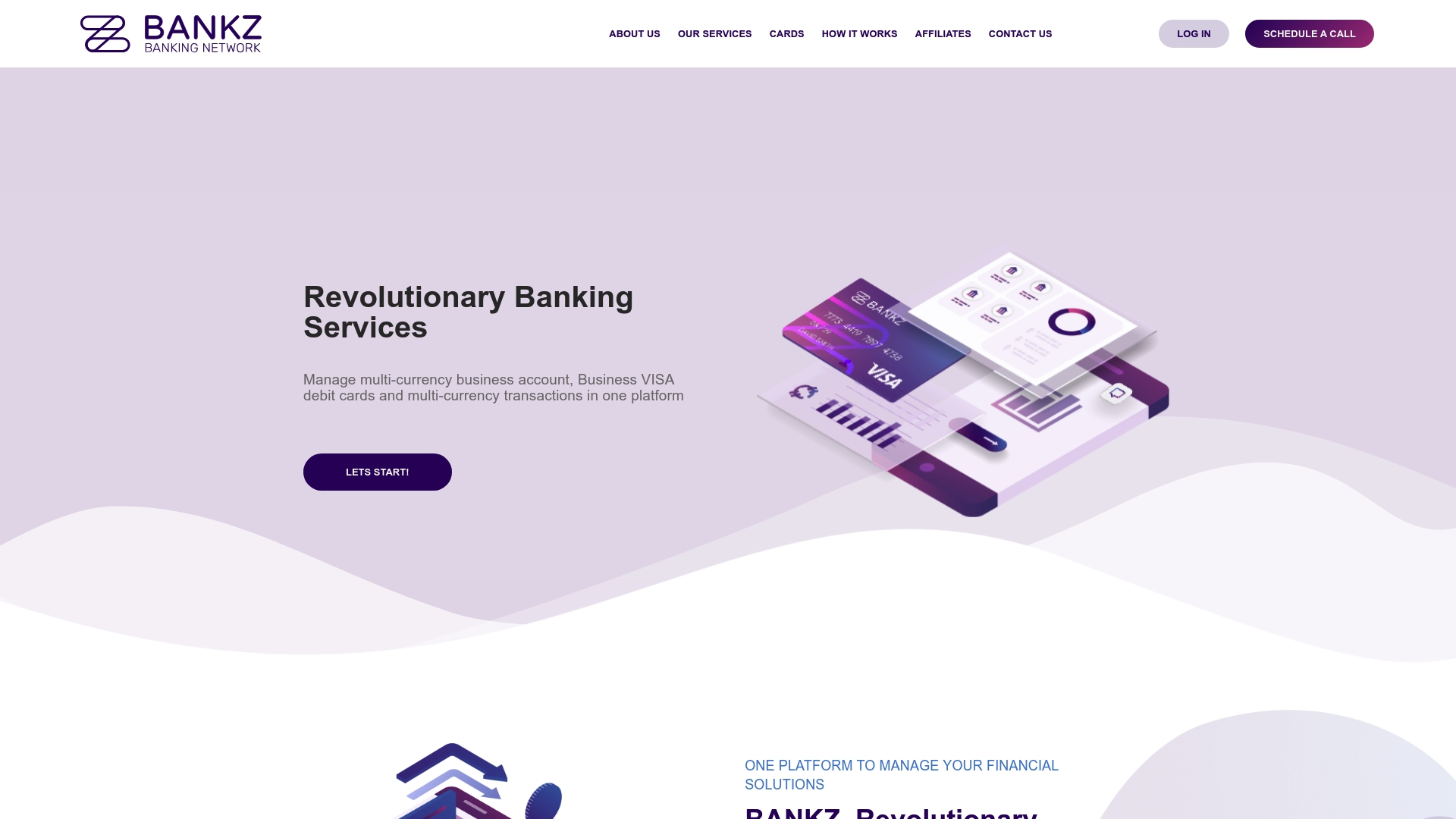
Transparent fee structures starting at 0.1% on cross-border transactions preserve margins while dedicated support teams provide guidance on compliance and regulatory requirements specific to your industry.
The platform supports international business bank account solutions with full SWIFT, SEPA, and local GBP payment capabilities covering virtually all European business transaction needs. Combined with 48-hour onboarding and industry-specialized account management, Bankz offers complete banking infrastructure purpose-built for high-risk industries operating across borders.
Businesses seeking to simplify financial operations while improving approval odds should explore how streamlining international business banking through specialized platforms creates operational efficiencies impossible with traditional banking relationships.
Frequently asked questions
What qualifies a business as high-risk for banking?
Businesses operating in industries prone to regulatory scrutiny, elevated chargeback rates, or fraud risk typically receive high-risk classifications from banks. This includes cryptocurrency, gaming, adult entertainment, CBD products, payment processing, forex trading, and certain e-commerce categories. Geographic factors like operating across multiple jurisdictions or serving sanctioned countries also increase risk profiles, as do business models involving subscription billing or high-ticket transactions.
How fast can I get approved for a business account as a high-risk company?
Fintech platforms specializing in high-risk industries can approve most applications within 48 hours when documentation is complete and accurate. Traditional banks typically require 2 to 4 weeks for application reviews, often resulting in rejections rather than approvals. The speed difference stems from automated compliance systems and industry-specific underwriting expertise that fintech providers have developed specifically for underserved markets.
Are multi-currency accounts worth the extra cost?
Multi-currency accounts reduce overall costs by eliminating frequent currency conversion fees and simplifying reconciliation across international operations. Businesses frequently transacting across borders typically achieve cost savings of 30% or more compared to maintaining separate single-currency accounts. The unified dashboard and multiple IBAN capabilities also reduce accounting complexity, saving administrative time that translates to additional cost efficiencies beyond direct fee reductions.
Which payment options are best for European cross-border business?
SEPA provides the fastest and most cost-effective solution for euro payments within the 36-country Euro zone, typically settling in under 24 hours. SWIFT handles global transactions beyond Europe, supporting payments to over 200 countries when you need worldwide reach. Local GBP payment systems optimize UK transactions, providing fast settlement for British trade relationships. International payment options including SWIFT, SEPA, and local GBP collectively address virtually all European business payment scenarios when available through your banking provider.