

Cross-border payments drain SME budgets through hidden fees and slow transfers, hindering growth across European markets. In 2026, fintech accounts revolutionize international banking with multi-currency wallets, transparent pricing, and instant settlements. This guide walks you through essential features, top providers, and compliance advantages to help you select the optimal fintech account for your business needs.
Table of Contents
- How To Choose The Right Fintech Account: Selection Criteria
- Leading Multi-Currency Fintech Accounts In Europe
- Cross-Border Payment Features And Benefits
- Integrated Cards And Expense Management
- Compliance And Regulatory Features
- Situational Recommendations For SMEs
- Discover Bankz Multi-Currency Fintech Accounts For Your SME
Key takeaways
| Point | Details |
|---|---|
| Multi-currency and local IBANs | Fintech accounts support 20 to 40+ currencies with local IBANs, enabling seamless payments across European markets. |
| Reduced FX costs | Transparent pricing cuts foreign exchange fees by up to 50% compared to traditional banks. |
| Instant payments | SEPA instant and local rails settle transfers in under 10 seconds for many corridors. |
| Automated compliance | KYC/AML automation and GDPR alignment reduce onboarding time by up to 70% while ensuring regulatory adherence. |
| Integrated spending tools | Physical and virtual VISA cards with expense management streamline vendor payments and team budgets. |
How to choose the right fintech account: selection criteria
Selecting a fintech account requires evaluating how well the provider aligns with your SME's operational footprint and financial workflows. Currency coverage is the foundation. Wise Business, Revolut Business, and Qonto lead European multi-currency business accounts by offering local IBANs, low foreign exchange spreads, and integrated payment cards tailored for SMEs and startups. If your business operates across multiple European jurisdictions, prioritize accounts that issue local IBANs for each market to avoid intermediary fees and accelerate payment acceptance.
Foreign exchange transparency directly impacts your bottom line. Traditional banks often embed 3% to 5% markups in FX rates, while leading fintech accounts offer spreads below 1%. Examine real-time rate displays and watch for hidden conversion charges that compound on international transactions. Cross-border payment speed depends on the provider's access to local settlement rails and instant payment infrastructure. SEPA and IBAN benefits include near-instant transfers within the eurozone, reducing cash flow gaps that slow vendor payments and supplier relationships.
Regulatory compliance protects your business from operational disruptions and legal exposure. Accounts adhering to PSD2 standards and preparing for PSD3 updates ensure compatibility with evolving European banking regulations. Automated KYC processes speed onboarding by digitizing identity verification and beneficial ownership checks, cutting approval times from weeks to days. Integrated cards and expense management tools further consolidate financial operations, allowing you to issue team cards, categorize spending, and track budgets within a single platform rather than juggling multiple banking relationships.
Pro Tip: Map your payment corridors and currency pairs before comparing fintech accounts. If 80% of your transactions involve EUR, GBP, and USD, choose a provider with the deepest liquidity and tightest spreads in those specific currencies to maximize cost savings.
Leading multi-currency fintech accounts in Europe
Understanding the feature sets and pricing structures of top European fintech providers helps you match your SME's needs with the right platform. Each provider targets distinct business profiles, from cost-conscious freelancers to scaling enterprises requiring API integration.
Wise Business supports over 40 currencies with mid-market FX rates and transparent fees averaging below 1% per conversion. The platform charges no monthly subscription, making it ideal for SMEs prioritizing variable cost structures tied to transaction volume. Local IBANs for EUR, GBP, USD, and other major currencies streamline payments and reduce rejection rates from clients unfamiliar with foreign account numbers. Batch payment features and API access suit businesses handling recurring supplier invoices or payroll across borders.
Revolut Business offers tiered monthly plans ranging from €10 for basic accounts to €40+ for premium tiers with enhanced limits and team features. Wise Business supports 40+ currencies with low FX spreads and no monthly fees; Revolut Business offers team cards and tiered plans; Qonto integrates with accounting and compliance tools for EU SMEs. The platform excels in team card management, issuing physical and virtual cards with customizable spending controls for employees. Currency wallets hold balances in 25+ currencies, and instant FX conversion eliminates waiting periods when shifting funds between accounts.
Qonto focuses on compliance and accounting integration for EU SMEs, offering fixed monthly fees between €9 and €99 depending on transaction limits and user seats. The platform embeds receipt capture, invoice matching, and real-time categorization to simplify VAT reporting and bookkeeping. Qonto's strength lies in its regulatory alignment with European standards, making it a natural fit for businesses prioritizing audit trails and financial transparency.
Airwallex targets enterprises and high-growth SMEs requiring robust API integration and scalable infrastructure. Supporting 20+ currencies with fast global transfers, the platform enables automated payment workflows and reconciliation for businesses processing thousands of transactions monthly. Airwallex pricing scales with volume, making it cost-effective for larger operations but potentially expensive for smaller SMEs.
| Provider | Currencies | Monthly Fee | FX Spread | Best For |
|---|---|---|---|---|
| Wise Business | 40+ | €0 | <1% | Cost-conscious SMEs with variable volume |
| Revolut Business | 25+ | €10-€40+ | Competitive | Startups needing team cards and budgeting |
| Qonto | EU focus | €9-€99 | Standard | EU SMEs prioritizing compliance and accounting |
| Airwallex | 20+ | Volume-based | Competitive | Enterprises requiring API and automation |
Pro Tip: Test multiple platforms with small transactions before committing. Cut FX costs checklist strategies include comparing live FX rates during peak trading hours when spreads tighten, revealing which provider delivers the best real-world pricing for your payment corridors.
Cross-border payment features and benefits
Fintech accounts accelerate international payments through regulated infrastructure and direct access to local settlement networks. Traditional correspondent banking chains route cross-border transfers through multiple intermediaries, each adding fees and processing delays that stretch settlement times to three to five business days. Fintech accounts holding Electronic Money Institution (EMI) licenses operate within European regulatory frameworks while leveraging local payment rails to bypass intermediaries.
SEPA instant payments infrastructure and local rails enable transfers to settle in under 10 seconds for many European corridors, with instant transfers expected to cover 50% of transactions by 2026. This speed transforms cash flow management, allowing SMEs to pay suppliers immediately upon invoice receipt and capture early payment discounts that offset fintech account fees. Real-time FX pricing eliminates double conversion charges common in traditional banking, where funds convert at account deposit and again at withdrawal.
Transparent fee structures published upfront remove the guesswork from international payment costs. Fintech accounts display exact conversion rates and transfer fees before confirming transactions, allowing you to evaluate whether immediate payment or waiting for favorable FX movement makes financial sense. Batch payment capabilities further streamline operations by processing multiple international transfers simultaneously, reducing administrative overhead for businesses managing diverse supplier networks across Europe.
Faster settlements improve working capital efficiency by shortening the gap between payment initiation and fund availability. When your business receives client payments instantly rather than waiting days for clearance, you can reinvest capital sooner into inventory, marketing, or growth initiatives. This velocity advantage compounds over time, creating competitive benefits for SMEs operating on tight margins.
The combination of speed, transparency, and cost reduction fundamentally reshapes how European SMEs approach international commerce. Fintech accounts eliminate the payment friction that historically constrained cross-border expansion, enabling smaller businesses to compete on equal footing with larger enterprises maintaining dedicated treasury operations.
Integrated cards and expense management
Fintech accounts bundle payment infrastructure with spending controls that centralize financial management for distributed teams. Leading European fintech accounts offer integrated VISA debit cards (physical and virtual), enabling businesses to manage spending and expenses directly linked to multi-currency wallets. This integration eliminates the need for separate corporate card programs and expense reimbursement workflows that create reconciliation headaches.

Physical cards work for in-person purchases and ATM withdrawals, while virtual cards generate unique numbers for online subscriptions and vendor payments. Virtual cards enhance security by limiting exposure if credentials are compromised, as you can instantly freeze or delete individual card numbers without disrupting other payment channels. Team card features allow you to issue cards to employees with preset spending limits, merchant category restrictions, and expiration dates that automatically disable cards after project completion.
Expense categorization occurs at the point of sale, tagging transactions with cost centers, projects, or departments for real-time budget tracking. Receipt capture through mobile apps links documentation directly to transactions, streamlining VAT reclaim and audit preparation. Batch payment capabilities enable you to settle multiple supplier invoices simultaneously, reducing manual data entry and accelerating payables processing.
Multi-currency cards support spending in the wallet's native currency, avoiding conversion delays and unnecessary FX fees when employees travel or purchase from international vendors. If your team member attends a conference in Switzerland, they can spend directly from a CHF wallet balance rather than converting EUR at unfavorable rates. This granular currency control extends to payroll, where you can pay contractors in their local currency without routing payments through correspondent banks.
Cash flow visibility improves dramatically when all spending consolidates within a single platform. Real-time balance updates and transaction notifications alert you to unusual activity or budget overruns before they escalate. Automated reconciliation matches card transactions with accounting entries, reducing month-end close times and freeing finance teams to focus on strategic analysis rather than data validation.
Pro Tip: Structure virtual cards by vendor or subscription to isolate recurring costs. Create a dedicated virtual card for each SaaS tool, marketing platform, or supplier relationship so you can instantly identify spending patterns and negotiate better terms when renewal periods approach.
Compliance and regulatory features
Automated compliance frameworks embedded in fintech accounts reduce onboarding friction while maintaining regulatory adherence across European jurisdictions. SMEs benefit from fintech accounts' compliance frameworks that include automated KYC/AML, GDPR-aligned data protection, and integration with European regulatory standards like PSD2 and the upcoming PSD3. Traditional bank onboarding often requires physical document submission and multi-week verification periods, creating operational delays for time-sensitive business opportunities.
Automated KYC reduces account opening time by up to 70% through digital identity verification, beneficial ownership screening, and real-time document validation. Upload your business registration, director identification, and proof of address through a mobile app or web portal, and verification algorithms cross-reference data against regulatory databases within hours. This speed enables you to establish banking relationships concurrent with business formation rather than waiting weeks for account approval.
GDPR-aligned privacy protections safeguard customer and transaction data through encrypted storage, access controls, and audit trails documenting every system interaction. These protections matter beyond regulatory compliance. Clients increasingly demand proof of data security when selecting vendors, and demonstrating GDPR adherence strengthens trust in your business relationships. Anti-money laundering (AML) monitoring occurs continuously through transaction pattern analysis that flags unusual activity without manual review.
PSD2 compliance ensures strong customer authentication (SCA) for payment initiation, reducing fraud risk through multi-factor verification. Upcoming PSD3 regulations will expand open banking frameworks and strengthen consumer protections, and fintech accounts preparing for these changes future-proof your operations against regulatory shifts that might disrupt legacy banking relationships. Business account verification processes that adapt to evolving standards prevent account freezes or service interruptions when rules change.
Robust compliance frameworks also reduce the risk of involuntary account closures that plague businesses in high-risk industries. Fintech accounts designed for diverse business models apply risk-based approaches rather than blanket exclusions, evaluating each SME individually against regulatory requirements. This flexibility proves crucial for online businesses, import/export operations, and digital service providers that traditional banks often categorize as too risky despite operating legally.
Situational recommendations for SMEs
Matching fintech accounts to your specific business profile maximizes value and minimizes operational friction. Different SME scenarios demand distinct feature priorities.
-
Fast-growing startups benefit from Revolut Business due to robust team card management, tiered plans accommodating rapid user growth, and budgeting tools that scale with headcount. Virtual card issuance for remote employees and spending analytics dashboards help founders maintain financial control during expansion phases when oversight becomes challenging.
-
Import/export businesses should prioritize Wise Business for broad currency coverage, minimal monthly fees, and transparent FX pricing that reduces margin erosion on international transactions. The platform's batch payment capabilities streamline supplier invoicing across multiple countries, while local IBANs improve payment acceptance rates from European clients unfamiliar with foreign account numbers.
-
EU-focused SMEs requiring tight accounting integration and compliance documentation find Qonto's fixed-fee structure and embedded bookkeeping features align well with regional operational patterns. Real-time expense categorization and VAT-ready reporting simplify tax preparation for businesses navigating complex EU regulatory environments.
-
Highly international enterprises or API-driven businesses gain the most value from Airwallex's scalable infrastructure and automation capabilities. The platform supports high transaction volumes without degrading performance, and webhook integrations enable custom payment workflows that sync with ERP systems or proprietary financial software.
-
High-risk industries benefit from specialized fintech accounts that evaluate businesses individually rather than applying blanket industry exclusions. Euro business account benefits include access to payment infrastructure that traditional banks deny to sectors like crypto services, adult entertainment, or CBD products despite legal operation.
Select your fintech account based on currency corridors where you conduct the majority of transactions, average payment volume that determines whether fixed or variable fee structures prove more economical, and business risk profile that influences approval likelihood and ongoing account monitoring intensity.
Discover Bankz multi-currency fintech accounts for your SME
If you're ready to eliminate cross-border payment friction and gain control over international spending, Bankz delivers tailored solutions for European SMEs. Managing cross-border payments and FX costs becomes straightforward when you access the right infrastructure.
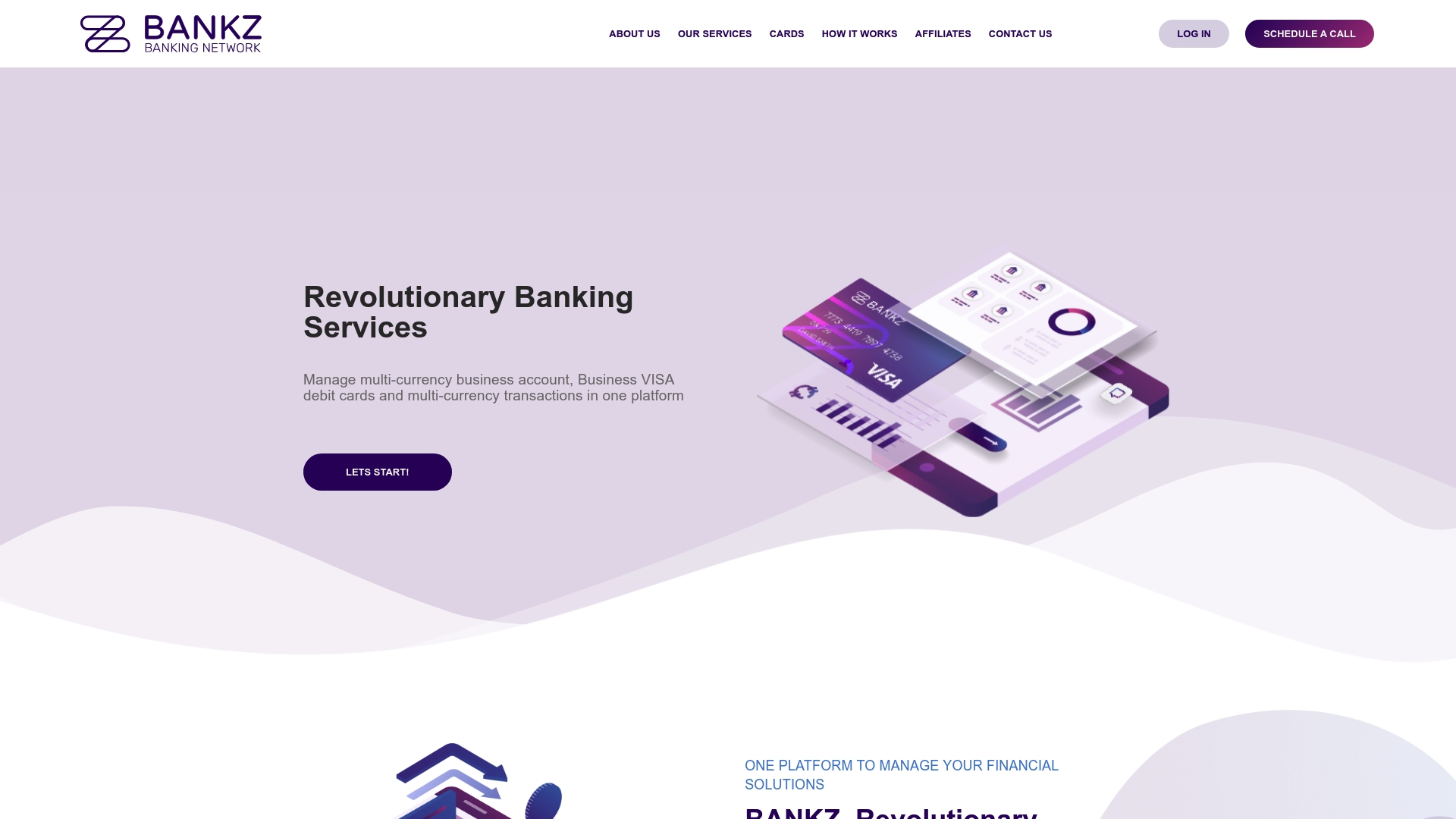
Bankz multi-currency accounts provide the currency coverage and local IBANs your business needs to operate seamlessly across European markets. Integrated business debit Visa cards simplify international spending while maintaining expense visibility and control. The platform's streamlined onboarding process and compliance features support quick setup without the delays that plague traditional banking relationships. International business bank accounts through Bankz unlock the speed and cost advantages discussed throughout this guide. Explore business debit Visa cards with Bankz to optimize your SME's financial operations.
FAQ
What currencies do European fintech accounts typically support?
Most leading fintech accounts support 20 to 40+ currencies, including major and regional European currencies suitable for varied international transactions. Currency coverage varies by provider, with Wise Business offering the broadest range and Qonto focusing primarily on EU currencies.
How fast are cross-border payments with fintech accounts?
Payments can settle in under 10 seconds using SEPA instant and local rails for many European corridors. Instant payment adoption is growing rapidly and expected to cover 50% of transactions by 2026, significantly reducing cash flow gaps compared to traditional three to five day settlement periods.
What compliance measures do fintech accounts follow in Europe?
Fintechs comply with EU PSD2, upcoming PSD3, GDPR data privacy, and use automated KYC/AML systems. These features ensure legal adherence, data protection, and significantly faster account verification, reducing onboarding times by up to 70% compared to traditional banks.
Which fintech account is best for fast-growing startups?
Revolut Business is recommended due to robust team card management, tiered plans, and budgeting tools for growing teams. It supports virtual cards and multi-currency wallets suited for scaling operations, with spending controls that help founders maintain oversight during rapid expansion.
Do fintech accounts work for high-risk industries?
Many fintech accounts evaluate businesses individually rather than applying blanket industry exclusions, making them accessible to legally operating high-risk sectors. Specialized platforms provide payment infrastructure that traditional banks often deny to industries like crypto services, adult entertainment, or CBD products.